Exploring Algorithmic Personalization Techniques That Tailor Free Play Opportunities in Smartphone-Based Wagering Applications
Zoe Becker · Jun 18, 2026
Exploring Algorithmic Personalization Techniques That Tailor Free Play Opportunities in Smartphone-Based Wagering Applications
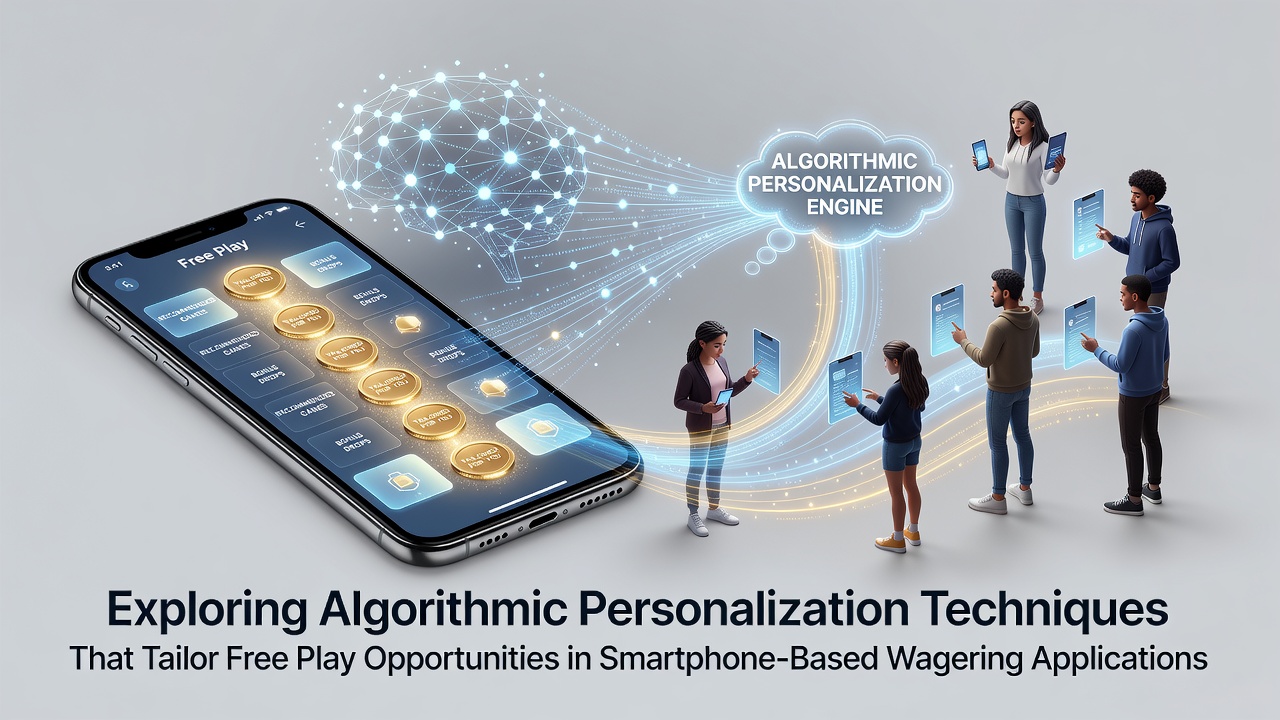
Smartphone-based wagering applications rely on algorithmic personalization to adjust free play opportunities according to individual user patterns, and these systems process large volumes of behavioral data to generate tailored incentives that match player activity levels and preferences. Developers integrate machine learning models that analyze session duration, game selection, and deposit frequency, while the resulting outputs determine the type and timing of free spins or bonus credits distributed within the app environment.
Data Collection Mechanisms in Mobile Wagering Platforms
Applications gather information through device sensors, account histories, and interaction logs, then feed these inputs into classification algorithms that segment users into categories based on risk tolerance and engagement metrics. Researchers at institutions such as the University of Nevada, Reno have documented how supervised learning techniques identify clusters of similar players, allowing platforms to assign free play rewards that align with observed spending thresholds. Real-time tracking occurs during active sessions, and the algorithms update profiles continuously to reflect shifts in behavior without requiring manual intervention from operators.
Core Algorithm Types Applied to Free Play Distribution
Collaborative filtering compares one user’s history against aggregated data from thousands of others to predict which free play formats might sustain participation, whereas content-based approaches examine specific game attributes that a player has favored in past sessions. Reinforcement learning models treat each reward delivery as an action within a dynamic environment, optimizing future offers to maximize retention signals while staying within regulatory limits on promotional value. These methods operate in parallel on backend servers, and developers adjust weighting parameters periodically based on performance indicators collected across regional markets.
Platforms in jurisdictions including New Jersey and Pennsylvania have reported increased use of hybrid models that combine elements of both filtering strategies, and industry reports from the American Gaming Association indicate that such integrations correlate with measurable changes in average session length during the first half of 2026. The systems prioritize offers that fit within daily or weekly caps established by state regulators, and automated compliance checks run before any personalized reward reaches a user’s account.
Behavioral Triggers and Reward Calibration
Algorithms monitor sequences of wins and losses to time the release of free play credits, often inserting them after extended losing streaks to maintain activity or following high-volume periods to reinforce positive associations. Calibration occurs through decision trees that weigh factors such as time since last login, total wagers placed in the preceding week, and device type, then generate an offer package that varies in size and game eligibility. Observers note that these adjustments happen within milliseconds of data ingestion, and the process repeats across millions of daily interactions without human review of individual cases.

Geolocation data further refines targeting because certain regions impose distinct promotional rules, and the models incorporate these constraints automatically when calculating eligible free play amounts. In June 2026 several operators expanded testing of multi-armed bandit algorithms that balance exploration of new reward formats against exploitation of proven high-engagement options, and early performance data suggests measurable differences in redemption rates across test cohorts.
Privacy Safeguards and Regulatory Oversight
Personalization engines operate under data minimization principles that limit the scope of collected attributes to those directly relevant to reward allocation, and encryption protocols protect transmission between mobile devices and central servers. Regulatory bodies such as the Nevada Gaming Control Board require operators to maintain audit trails documenting how algorithmic decisions produce specific free play outcomes, and third-party reviewers periodically examine model fairness to prevent unintended bias in offer distribution. Users retain options to adjust data-sharing preferences within app settings, which in turn restricts the granularity of personalization applied to their accounts.
Cross-border operations add another layer because Canadian provincial regulators and Australian state authorities maintain separate standards for promotional transparency, and algorithms must route decisions through jurisdiction-specific rule engines before finalizing any reward. This modular architecture allows a single codebase to serve multiple markets while satisfying local compliance requirements without duplicating core logic.
Integration with Loyalty and Tiered Systems
Free play personalization often intersects with loyalty frameworks that assign players to progressive tiers based on cumulative activity, and the algorithms elevate reward values as users advance through these levels. Predictive components estimate future tier movement and pre-allocate enhanced offers to encourage continued progression, yet actual delivery remains contingent on sustained behavior that meets predefined thresholds. Case examples from major operators show that such layered systems can increase the frequency of free play redemptions among mid-tier users compared with static promotional schedules.
Testing environments simulate thousands of player profiles to validate that algorithmic outputs remain within acceptable variance ranges, and adjustments occur when deviations exceed internal benchmarks. The result is a continuously refined distribution process that adapts to aggregate trends while preserving individual tailoring.
Conclusion
Algorithmic personalization techniques continue to shape how free play opportunities reach users of smartphone wagering applications through systematic analysis of behavioral signals and regulatory constraints. The combination of filtering methods, reinforcement learning, and jurisdiction-aware calibration produces reward structures that reflect documented patterns in user activity across different markets. Ongoing refinements in model architecture and compliance integration support these processes as operators respond to evolving data availability and oversight requirements in 2026.